
How to Season and Clean a Potjie Pot — South African Cast Iron Care Guide
Everything a South African potjie owner needs: first-use seasoning, daily cleaning without soap, rust recovery, indoor vs outdoor use, and the traditional sizing chart. Compiled from 49 years of Big5 Cookware’s experience with the country’s cast iron pot tradition.
Why cast iron seasoning matters
Cast iron is not naturally non-stick. The dark, polished patina that experienced potjie owners are proud of is built up over time — it’s a layer of polymerised cooking oil that has bonded to the cast iron surface through repeated heating. A well-seasoned potjie pot becomes more non-stick than any factory non-stick coating, lasts decades, and gets better with every meal cooked in it.
An unseasoned potjie pot will stick, rust, and frustrate. The good news: seasoning is straightforward, and any potjie pot can be recovered from rust.
First-use seasoning — step by step
- Wash the new potjie pot in hot water only. No soap. Use a stiff brush to remove any factory dust or coating residue. Rinse thoroughly.
- Dry completely over heat. Place the pot on a stove burner over medium heat for 5–10 minutes until all moisture has evaporated. The pot should be bone-dry before the next step.
- Apply a thin layer of neutral vegetable oil. Use sunflower, canola, grape-seed, or any high-smoke-point neutral oil. Rub the oil on ALL surfaces — inside, outside, lid, handles, and legs. “Thin layer” means thin: the oil should look like a damp coating, not a puddle. Excess oil leaves sticky spots after baking.
- Bake upside down at 200 °C for one hour. Place the pot upside down on the middle rack of a domestic oven (put foil on the rack below to catch drips). The high heat polymerises the oil, bonding it to the cast iron as a hard, non-stick patina. One hour is the minimum; up to 90 minutes for a stronger first seasoning.
- Cool completely. Turn the oven off and let the pot cool inside the oven. Do not rush this with cold water — thermal shock can crack cast iron.
- Wipe off any excess oil. After cooling, wipe over with a paper towel. The surface should look matte-black and feel dry, not sticky.
- Repeat 2–3 times for a strong initial patina. Each pass builds up the layer. Most cooks find 2 passes is enough; 3 passes for a pot that will see heavy outdoor use.
Important: the patina darkens further with every meal you cook in the pot. The pot you season today will look very different (and perform far better) after 20 meals.
How to clean a potjie pot after cooking
- Allow the pot to cool completely. Do not pour cold water into a hot cast iron pot — the thermal shock can crack the cast iron.
- Use hot water and a stiff brush or chainmail scrubber. A stiff nylon brush or a chainmail scrubber (a piece of stainless chainmail you can buy at outdoor stores) removes food residue without damaging the patina. Never use soap, dishwasher tablets, or harsh abrasives — these strip the patina away.
- For stuck-on food, simmer water in the pot for 10 minutes. The simmering water loosens burnt food. Then scrape with a wooden spoon. Most stuck-on residue comes off without effort once the water has done the work.
- Dry over heat immediately. Place the pot on a stove burner or over the fire and heat until all water has evaporated. Never air-dry — air-drying allows water to sit on the iron and rust will form within hours.
- Rub a thin layer of cooking oil on all surfaces. Before storage. This protects the patina and prevents rust from forming during storage.
- Store with the lid off. Trapped moisture between the pot and a closed lid is the most common cause of rust. Place a sheet of paper towel or absorbent paper inside if storing closed.
My potjie is rusty. Can I save it?
Yes. Cast iron rust is reversible. Here’s the recovery procedure:
- Scrub the rust off. Use steel wool, or for milder rust, coarse salt (kosher or sea salt) + a little vegetable oil. Scrub vigorously until the rust is gone and the bare iron is visible. The pot will look dull-grey, not black — that’s expected.
- Rinse with hot water, no soap. Remove all the salt and rust particles.
- Dry over heat immediately. Do not air-dry.
- Re-season. Follow the first-use seasoning steps above. A heavily rusted pot may need 3–4 seasoning cycles to recover its patina fully.
The take-home: rust looks bad but isn’t terminal. You can resurrect a 30-year-old rusty potjie that’s been sitting in a garage and use it for the next 30 years.
Traditional South African potjie size chart
Potjie pots in South Africa follow a traditional number system. The numbers reflect the diameter of the pot, not litres or kilograms. For full-meal portions (potjiekos with stewed meat, vegetables, and starch over a 3-hour slow cook):
| Potjie size | Feeds (people) | Typical use |
|---|---|---|
| No. 1/4 | 1–2 | Single-serve, sauce, side dish |
| No. 1 | 3–4 | Small couple / camping starter |
| No. 2 | 6–8 | Small family / starter household size |
| No. 3 | 10–12 | Standard family household size |
| No. 4 | 14–18 | Large family / weekend cookout |
| No. 6 | 20–25 | Braai club / extended family |
| No. 10 | 40–50 | Community event / church lunch |
| No. 14 | 60–70 | Large event / catering |
| No. 20 | 90–110 | Wedding catering |
| No. 25 | 130+ | Festival, large gathering |
Most South African households own a No. 2 or No. 3. Braai-club regulars typically own a No. 6 or larger. Catering operators run No. 10 and above.
Can I use a potjie pot indoors?
Yes — cast iron works on virtually any heat source: gas, electric coil, ceramic glass top (use a heat diffuser to protect the glass from the rough cast iron base), and induction (cast iron is magnetic and naturally induction-compatible). Cast iron is also oven safe up to 260 °C.
The catch: the traditional 3-leg potjie is designed to sit directly on coals or in a fire. Indoors on a stove, the legs raise the pot slightly above the burner, which can affect heating. Many cooks place the 3-leg potjie on a wide trivet or simply remove the legs for indoor use. A flat-bottom Dutch oven potjie is the better choice for primarily indoor cooking.
Frequently Asked Questions
Do I need to season a new potjie pot before using it?
Yes. Cast iron must be seasoned before first use — wash with hot water, dry over heat, apply a thin layer of vegetable oil to all surfaces, bake upside down at 200 °C for one hour, allow to cool, wipe off excess oil. Repeat 2–3 times for a strong initial patina.
Can I use soap to clean my potjie?
No. Soap strips the patina that gives the pot its non-stick performance. Use only hot water and a stiff brush or chainmail scrubber. For stuck-on food, simmer water in the pot for 10 minutes, then scrape with a wooden spoon.
My potjie is rusty. Can I save it?
Yes. Scrub the rust off with steel wool or coarse salt + vegetable oil. Rinse with hot water (no soap). Dry over heat immediately. Re-season the pot following the first-use seasoning steps. A heavily rusted pot may need 3–4 seasoning cycles to recover fully.
What size potjie do I need?
Most households use a No. 2 (6–8 people) or No. 3 (10–12 people). Braai clubs run No. 6 (20–25 people). For full sizing chart see above.
Can I cook in a 3-leg potjie indoors?
Yes, but it’s not the ideal setup — the legs raise the pot above the burner. Use a wide trivet, or choose a flat-bottom Dutch oven potjie for indoor use.
Is cast iron induction compatible?
Yes. Cast iron is naturally magnetic and works on induction stovetops without any modification.
How long does a properly cared-for potjie pot last?
Decades. Many South African families pass potjie pots down generations. A well-seasoned pot that is kept dry and lightly oiled improves with age — the patina deepens, the non-stick character strengthens, and the pot cooks better at 30 years old than it did when new.
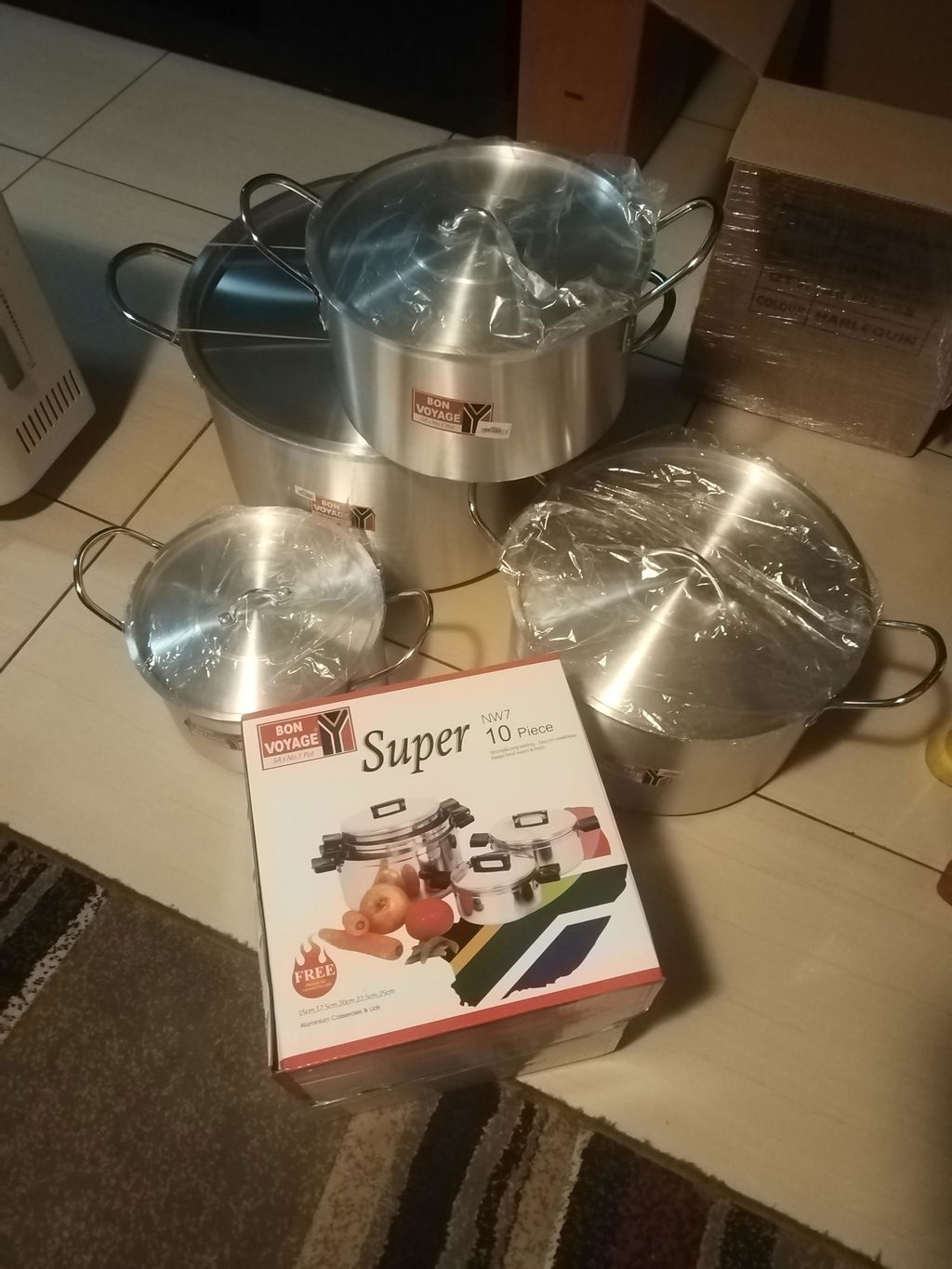
The Big5 / Bon Voyage potjie range
- Bon Voyage 3-Leg Cast Iron Potjie Pot — traditional South African design, 8 sizes from No. 1/4 (R 249) to No. 25 (R 4,999)
- Bon Voyage Cast Iron Dutch Oven Potjie Pot — flat-bottom design, better for indoor stove and oven use
- Bon Voyage 3-Piece Pre-Seasoned Heavy Duty Cast Iron Set — 35 cm Dutch oven + 35 cm shallow pot + 30 cm griddle lid
- Bon Voyage 7-Piece Pre-Seasoned Cast Iron Camping Set — complete outdoor cooking kit in a wooden storage box
- Bon Voyage Cast Iron Bread Pot — dedicated bread pot for sourdough and artisan loaves